
The problem most families don’t see coming
You may view wealth as an opportunity, security, and achievement. But without open conversation in generational wealth planning, it can quietly create tension, distance, and misunderstanding.
At its core, the real issue isn’t financial; it’s relational.
Nearly 70% of families face challenges in having clear communication about wealth.
This is where conflicts in relationships disrupt family wealth dynamics.
When Everything Looks Fine Until It Isn’t
In scenarios like what we often encounter with several high-net-worth families, the father built a successful business worth $20 million over 25 years. The family casually discusses business growth and wealth at dinner.
But it never openly discusses leadership or ownership in the family.
He assumes that succession is understood.
The younger son assumes equal ownership stakes.
The eldest son assumes leadership.
When an unexpected event like death or retirement hits, those assumptions quickly turn to conflicts.
Within years:
- The $20 million business begins to stall.
- Relationships strain.
- Mistrust begins to build.
The business did not suffer; relationships did due to weak wealth transfer planning.
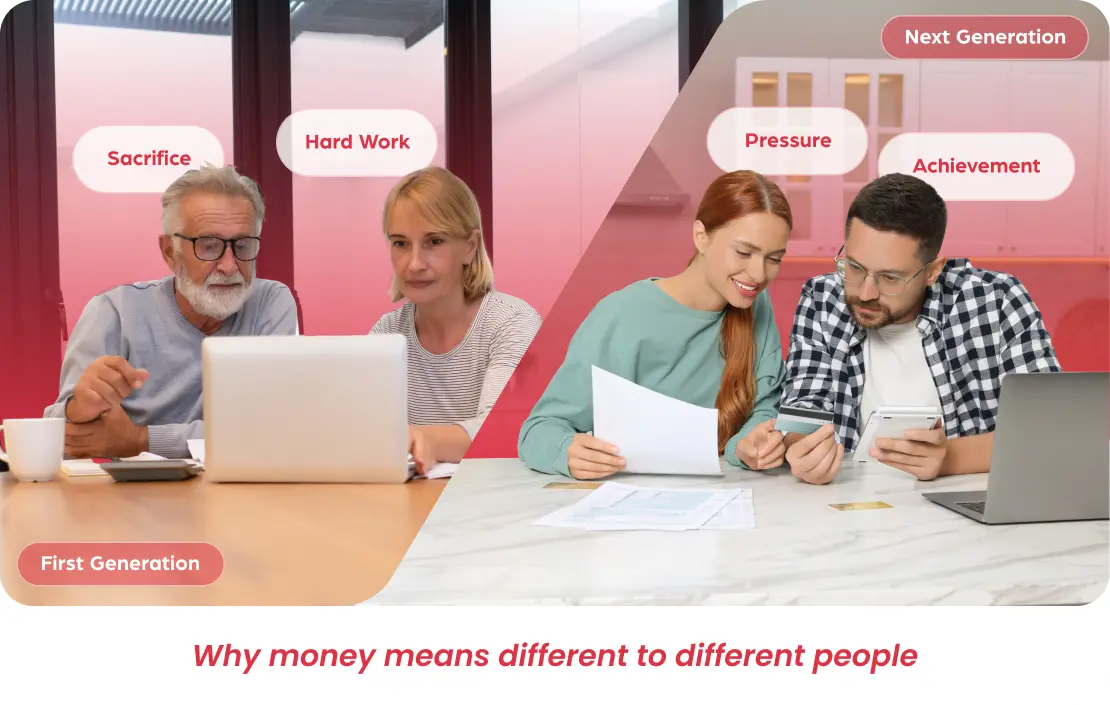
Why Money Means Different Things to Different People
If your family has built generational wealth, it becomes your family’s identity, representing independence and impactful legacy planning.
Behavioral finance research highlights that wealth often becomes a core part of a family’s identity. It shapes values, expectations across generations, and decisions. Over time, advisors consistently note and often observe financial capital evolving into emotional capital.
For the first generation, it reflects years of sacrifice, discipline, and hard work.
But for the next generation, it can be a sense of pressure or a source of achievement and security.
What one generation defines as financial security, another may see it as a strategic asset. What is perceived as entitlement by one can feel like rightful access to another.
What appears as just financial disagreement is often a difference in perspective about wealth between generations.
If left unaddressed, these gaps can lead to conflicts.
Wealth Transfer Planning: Where Most Families Go Wrong
Where Things Quietly Go Wrong
Wrong wealth succession planning is not intentional. It’s just a result of miscommunication and assumptions.
What we observe working with multi-generational families is most families lose generational wealth to the absence of shared communication and understanding and not planning.
A second-generation family runs a million-dollar manufacturing business.
Everything seems to run smoothly.
However,
- There is a lack of clarity around roles.
- The structural strategy is unclear.
- The transition document is absent.
Disagreements take place during a large investment decision.
All this stems from unclear communication.
Generational Wealth Planning: Aligning Vision Across Generations
The Real Cost Is Not Financial
If you are a part of a high-net-worth family, the issue isn’t the wealth itself.
Over the years working with many affluent families, we have experienced that the biggest risk isn’t market fluctuations; it’s unclear alignment and assumptions.
It is the absence of clear structure around wealth succession planning.
As wealth scales, the layers of complexity increase: an expanding group of stakeholders, trust, and investment.
Without a formalized approach, the wealth decisions are made informally rather than strategically.
You may not realize it initially.
But avoiding discussion about money in the family can create misunderstandings over time, often leading to conflicts.
In such times, you may notice that clarity gets replaced by assumptions, expectations are not discussed transparently, and when financial events occur, conflict often follows, triggered by simple misunderstandings.
Wealth Succession Planning: Building Structure Before Crisis
What Families Who Sustain Wealth Do Differently
If you look closely at the families that successfully preserve generational wealth, they share a common trait.
They treat wealth management as a structured system and not guesswork or assumption.
As your wealth scales, the wealth management structure can’t remain the same.
Wealthy families manage wealth through trusts and partnerships, clearly establishing the legal structure.
However, true success doesn’t always depend on documentation alone.
True success depends on how well families communicate these structures and stay together.
Structure Changes Everything
In a wealthy family we guided, there was growing conflict between siblings.
In one such case, two siblings were misaligned in their fundamental vision. One wanted partial divestiture of the business, while the other wanted its expansion. In the absence of clear structural governance, conversations weren’t strategic but emotional.
Instead of suggesting decision-making to them, we guided them to fix the scattered structure:
- Ownership clarity.
- Decision-making authority.
- Instances where group agreement is needed.
When clarity stepped in, discussions changed.
It became no longer personal but strategic.
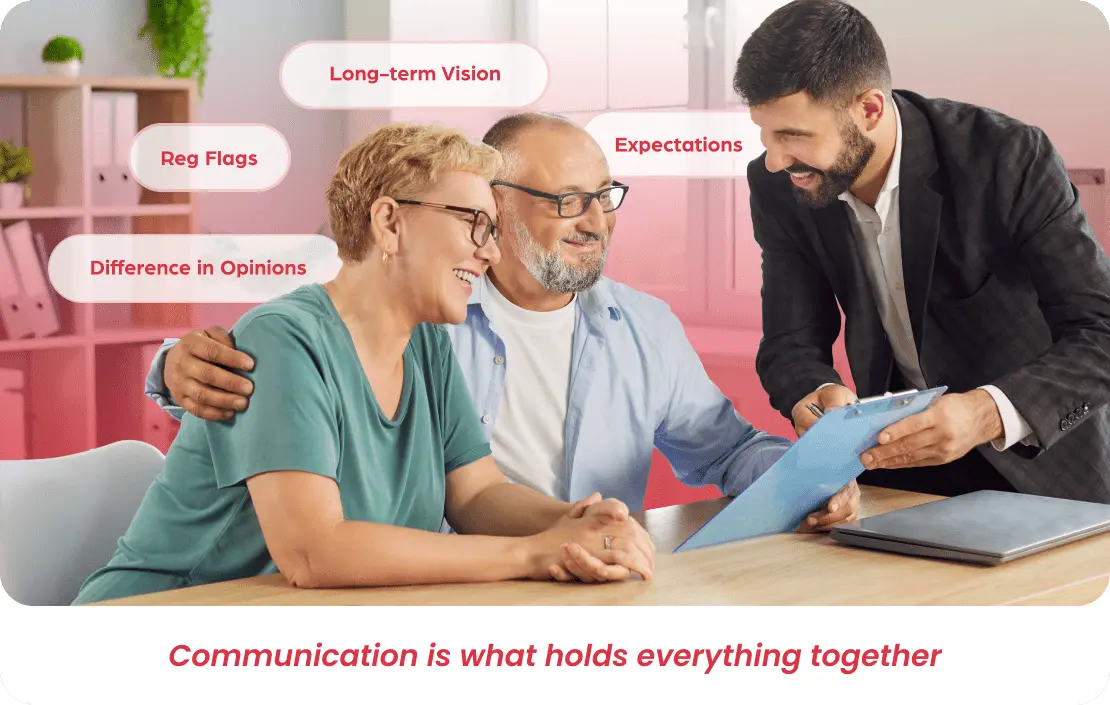
Communication Is What Holds Everything Together
Defining a structure alone doesn’t solve the problem.
Families that manage wealth successfully have regular and clear conversations.
They plan family discussions around:
- Expectations
- Long-term vision
- Red flags
- Differences in opinion
One high-net-worth family we guided arranged regular family meetings quarterly.
What started as uncomfortable conversations soon turned clear and impactful and shaped family wealth dynamics.
Preparing the Next Generation Early
Many families don’t include the next generation too early in the family discussions on wealth.
By the time they are included, they already have unclear expectations.
In successful families, they involve the younger generation in the discussion early.
They attend meetings and ask questions. They become familiar with how decisions are made.
So, when financial events occur, they are ready mentally.
A Simple Way to Start
If you are starting wealth management, begin with clarity.
- Document the ownership titles.
- Define the decision-making authority and time.
- Arrange regular family discussions, even if the members feel uncomfortable.
- Discuss key wealth milestones.
- Include the next generation early before they make assumptions.
You can avoid major conflicts in family wealth dynamics with these small steps.
When Wealth Becomes a Strength
When families have one vision, wealth creates purpose.
It supports clear decision-making.
It unites generations together instead of scattering them.
You can’t avoid disagreements completely.
At their core, they will support family wealth management.
The Role of a Modern Wealth Advisor
Wealth is beyond numbers; it is relationships, decisions, and people.
The main aim of a personal CFO today is to guide families with clarity and effective financial governance.
Most advisors focus only on investments.
At TQM Wealth Partners, we work as personal CFOs, turning complexities into clarity.
We shape family wealth dynamics by:
- Establishing a structured strategy.
- Aligning expectations
- Navigating leadership/ownership transitions
- Making clear decisions.
Because solving financial problems isn’t worth it if family unity is broken.
Download the checklist to assess how well your wealth is structured for long-term continuity.
FAQs
1. What is custom family wealth planning, and why is it critical for sustaining generational wealth?
Custom family wealth planning integrates family values, governance, and investments, ensuring structured and seamless wealth transition across generations.
2. How do family dynamics in wealthy families shape the success of wealth transfer?
Family dynamics in wealthy families shape wealth decisions at every level. When generations are misaligned, both relationships and assets can deteriorate over time.
3. How does TQM Wealth Partners’ Family Wealth Planning support multi-generational continuity?
TQM Wealth Partners’ Family Wealth Planning brings together governance, estate planning, and investment, operating as a personal CFO and focusing on long-term wealth transition across generations.
4. Why are legacy and estate planning services indispensable for preserving family capital?
Legacy and estate planning services reduce conflict, establish clarity, reduce conflict, and ensure seamless wealth transfer as per the family’s long-term vision.
5. What does family wealth dynamics indicate in wealth management?
Family wealth dynamics indicate the ways your family handles money. How expectations are managed in the family, different roles are defined, and decisions are made. It’s the point of intersection where behaviour, relationships, and finances meet and are sustained.
6. What causes conflict in wealthy families?
Wealthy families face disagreements from unclear expectations, confusing control or ownership, and lack of transparency. Disagreement, conflict, and assumptions about roles can introduce friction, especially in the critical financial transitions or decisions.
7. How can families transfer wealth smoothly across generations?
By combining clear communication with structured strategy. This includes having regular family discussions, setting up clear governance, preparing the next generation, and defining roles. Family wealth sustains longer when decisions are intentional and everyone is aligned.
8. What are the best transition planning services for family wealth in Boston?
The best transition planning services bring together investment planning, governance structuring, and estate planning. High-net-worth families should reach out to companies that are aligned strategically just like a personal CFO, ensuring long-term continuity.
9. What are intergenerational wealth planning services?
These services assist wealthy families in aligning leadership transitions, financial decisions, and long-term objectives across generations to make sure that the generational wealth sustains and gets transferred to the next generations smoothly.